Many marketing teams talk about lead nurturing.
They build email sequences, retargeting flows, content funnels, webinar follow-ups, and CRM automations. The goal is to keep the lead engaged until the person is ready to buy.
But the word nurturing can hide a weak assumption.
It can make marketing behave as if the buyer only needs more contact from the brand. More reminders. More offers. More messages. More touches.
In many markets, the deeper need is not more contact. It is better learning.
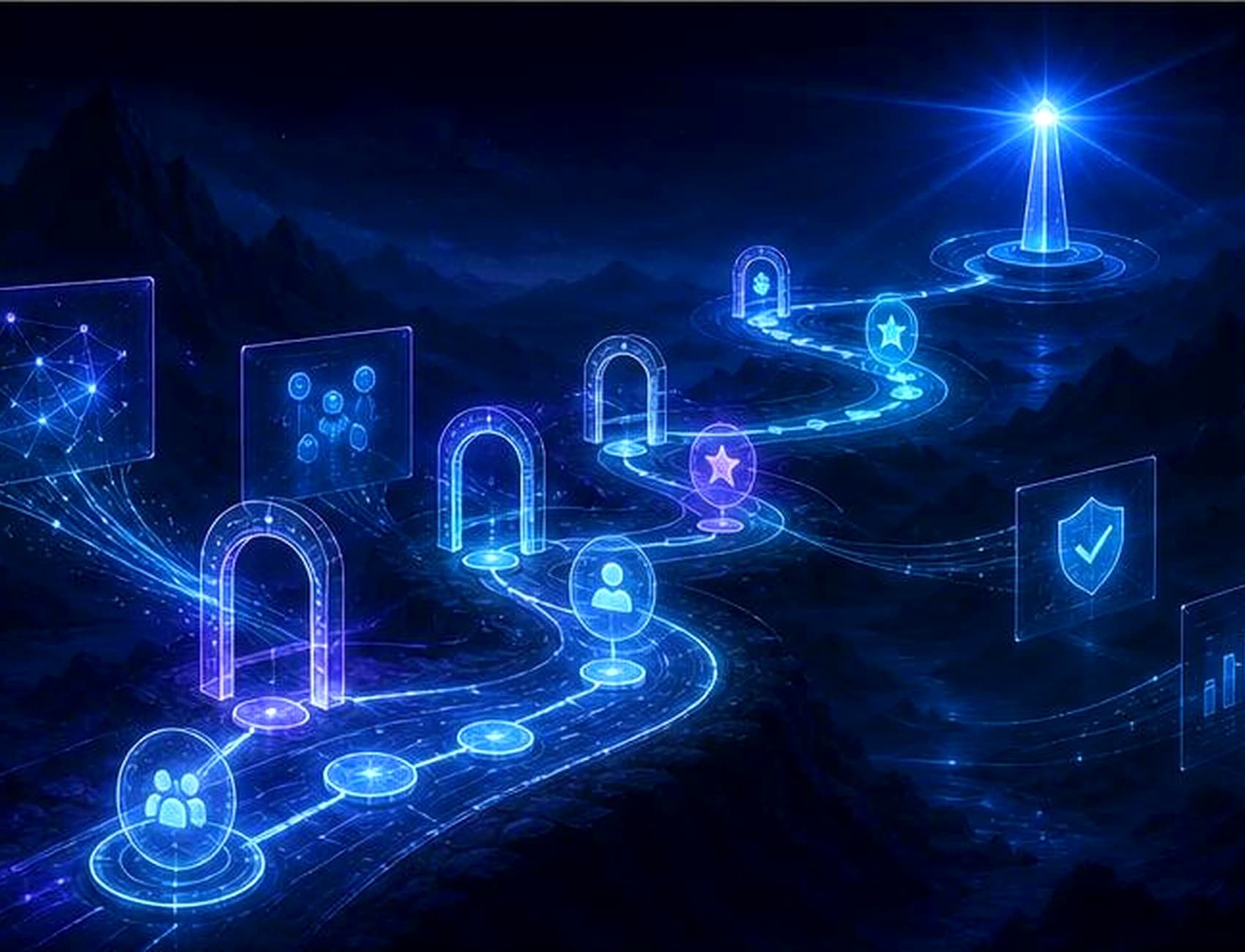
Marketing needs buyer learning paths, not only lead nurturing.
The Limit of Lead Nurturing
Lead nurturing usually starts after someone enters the funnel.
The person downloads something, fills a form, registers for an event, asks a question, or engages with content. Marketing then tries to move that person toward conversion.
This is useful when the buyer already understands the problem, trusts the category, and knows what kind of solution to evaluate.
But many buyers are not there yet.
They may feel a symptom but misunderstand the real problem. They may compare the wrong alternatives. They may underestimate the cost of inaction. They may lack trust in the category. They may not know what proof should matter.
If marketing pushes too quickly, the buyer feels pressure before clarity.
Buyers Do Not Only Convert. They Learn.
A buyer journey is not only a sequence of touchpoints.
It is a sequence of learning moments.
The buyer learns what the problem is. Then they learn why the problem matters. Then they learn what options exist. Then they learn which criteria should guide evaluation. Then they learn who can be trusted. Then they learn what action would be reasonable.
Marketing becomes stronger when it designs for this learning process.
Instead of asking only, "What message should we send next?" the team asks, "What does the buyer need to understand next?"
That question changes the quality of the entire funnel.
What a Buyer Learning Path Includes
A buyer learning path has four layers.
The first layer is problem education. The buyer needs to recognize the deeper issue, not only the surface pain.
The second layer is category education. The buyer needs to understand what type of solution is appropriate and why old alternatives may no longer fit.
The third layer is proof education. The buyer needs to know what evidence matters. Case studies, demonstrations, expert credibility, comparison logic, and implementation examples help reduce uncertainty.
The fourth layer is decision education. The buyer needs criteria for timing, budget, readiness, internal alignment, and risk.
This path does not manipulate the buyer. It respects the buyer's need to think clearly.
Why AI Can Make This Better or Worse
AI makes it easy to create nurture content.
It can generate email flows, landing page copy, ad variations, retargeting messages, and social posts quickly. But if the strategic path is unclear, AI simply creates more messages around the same weak logic.
The danger is automated pressure without buyer clarity.
Used well, AI can help map buyer questions, classify readiness stages, identify content gaps, summarize sales objections, and personalize educational sequences. But it needs a learning architecture to work from.
Without that architecture, AI becomes a content accelerator.
With that architecture, AI becomes a buyer education system.
How to Build the Path
Start with the buyer's current misunderstanding.
What do they believe the problem is? What are they missing? What decision criteria are they using too early or too late? What proof do they need before they can trust the next step?
Then map content to learning stages:
- Clarify the problem.
- Reframe the cost of staying the same.
- Explain the category.
- Show the right evaluation criteria.
- Provide proof.
- Reduce implementation fear.
- Invite the next decision.
This is more useful than filling a calendar with disconnected nurture messages.
Final Thought
Lead nurturing asks how to keep the buyer engaged.
Buyer learning paths ask how to help the buyer become clearer.
That difference matters.
In complex markets, the winning brand is not always the one that sends the most messages. It is often the one that teaches the market how to make a better decision.
Marketing earns trust when it improves buyer understanding before asking for commitment.
Key Takeaways
- Lead nurturing can become message pressure if it does not respect buyer learning.
- Strong funnels teach buyers how to understand the problem, category, proof, and decision criteria.
- AI is more useful when connected to a buyer learning architecture, not only a content sequence.
FAQ
What is a buyer learning path?
A buyer learning path is a structured sequence of content and experiences that helps buyers understand the problem, solution category, proof, and decision criteria.
How is it different from lead nurturing?
Lead nurturing often focuses on continued engagement. Buyer learning paths focus on improving the buyer's clarity and readiness.
Why does this matter for AI marketing?
AI can produce more messages, but strategic advantage comes from designing the right learning path those messages should serve.


