Most people still experience AI through a chat window.
They open ChatGPT, Claude, Gemini, or another assistant. They ask a question. They receive an answer. They copy the output somewhere else. Then they return to their real work across documents, browsers, messages, calendars, files, dashboards, and internal tools.
That workflow is useful, but it is still incomplete.
The deeper shift in applied AI is not simply that AI can answer better. It is that AI is starting to move closer to the environment where work actually happens.
This is why OpenClaw is interesting.
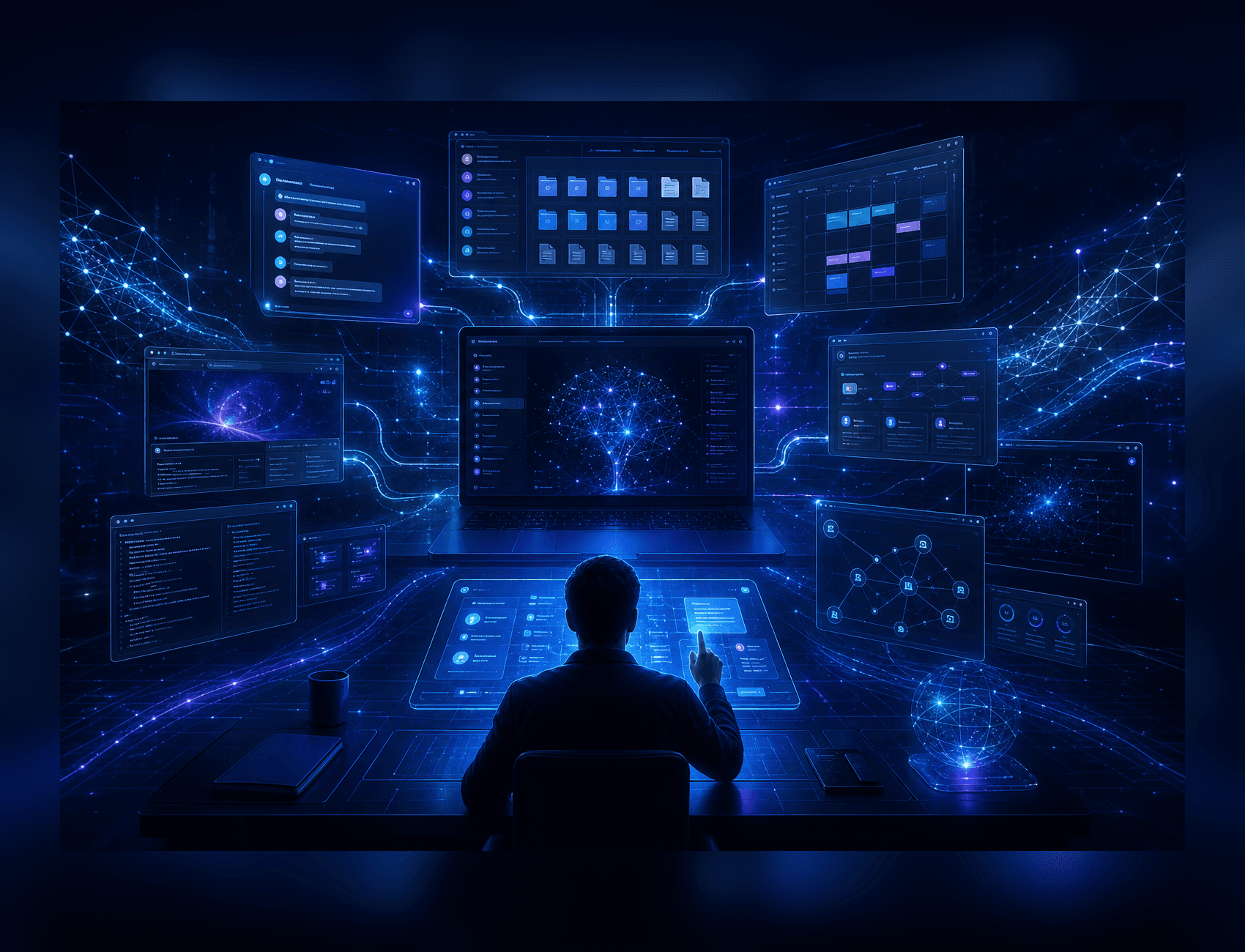
OpenClaw is not important only because it is another personal AI assistant. The more strategic point is that it represents a different direction for AI adoption: from isolated chatbot interaction to a personal operating environment where AI can connect conversation, tools, memory, files, channels, automations, and human judgment into one working system.
That distinction matters because the next wave of AI value will not come from better prompts alone. It will come from better environments.
The Chatbot Interface Is Useful but Too Narrow
The chatbot interface made AI accessible.
It gave people a simple way to interact with powerful models without needing technical skills. You could ask for a summary, draft an email, analyze an idea, write code, brainstorm content, or explain a concept in plain language.
That was an important first step.
But the chatbot interface also created a limitation: AI often sits outside the actual workflow.
You have to bring context into the chat. You have to explain what you are doing. You have to copy outputs back into other systems. You have to remember what was decided. You have to manually connect the AI answer to the next action.
In other words, the AI may be intelligent, but the environment remains fragmented.
This is where many people misunderstand productivity with AI. They think the main problem is output quality. But in real work, the bigger problem is often continuity.
Can the AI remember enough context?
Can it work across the channels where you already communicate?
Can it use tools instead of only giving advice?
Can it help execute the next step?
Can it maintain a relationship with your workspace over time?
If the answer is no, then AI remains a powerful conversation partner, but not yet a real operating layer.
OpenClaw Points to a Different Model
OpenClaw describes itself as a personal AI assistant you run on your own devices. It can connect to the channels people already use, including messaging platforms such as Discord, Telegram, WhatsApp, Slack, Signal, iMessage, and others. It can use a local workspace, skills, tools, scheduled tasks, browser and system capabilities, and different agent sessions.
The important idea is not the list of integrations.
The important idea is the architecture.
Instead of treating AI as a separate destination, OpenClaw treats AI as something that can live closer to the user’s daily operating surface.
That surface may include:
- conversations
- files
- browsers
- calendars
- terminals
- local folders
- workflows
- reminders
- dashboards
- media generation
- automation tools
- project memory
This changes the role of AI.
A chatbot waits for a prompt.
A personal AI environment can observe context, receive messages from different channels, use tools, remember working preferences, execute tasks, and return results where the user already is.
That is a more mature direction for applied AI because real work is not one prompt. Real work is a chain of context, decision, action, verification, and follow-up.
The Real Value Is Not Automation. It Is Continuity
Many people evaluate AI assistants by asking: What can it automate?
That is a reasonable question, but it is not the deepest one.
Automation is valuable only when the system understands enough context to act correctly. Without context, automation becomes risky. It can send the wrong message, update the wrong file, misread the task, or optimize for speed while losing judgment.
The stronger question is:
Can the assistant maintain continuity across work?
Continuity means the assistant is not just responding to a single request. It understands the broader working environment.
It knows the project structure.
It knows the user’s preferences.
It can refer to previous decisions.
It can use local files as memory.
It can distinguish between private context and public communication.
It can continue a task across multiple steps without forcing the user to re-explain everything.
This is where OpenClaw becomes strategically interesting. Its model encourages AI to become a persistent working companion rather than a disposable response engine.
For knowledge workers, founders, educators, marketers, and operators, this matters because most valuable work is not a single output. It is a process that compounds over time.
A content system improves when the assistant remembers brand voice, previous articles, SEO structure, publishing rules, and visual style.
A research system improves when the assistant can connect notes, sources, claims, drafts, and review standards.
A business system improves when the assistant can connect strategy, execution, reporting, communication, and follow-up.
The advantage is not one perfect answer.
The advantage is continuity of thought and action.
Why Personal AI Needs a Workspace, Not Just a Model
Most AI conversations focus too much on the model.
Which model is smarter?
Which model writes better?
Which model has a larger context window?
Which model is cheaper or faster?
These questions matter, but they are not enough.
A model without a workspace is still limited. It may be powerful, but it has no durable environment. It does not naturally know where your files live, what your current projects are, what rules matter, what tools are available, or how your workflows should be executed.
A workspace gives AI a place to operate.
It creates structure around the model.
It can contain memory files, project folders, skill instructions, templates, local scripts, drafts, logs, references, and system-specific rules. This turns AI from a general assistant into a situated assistant.
The difference is important.
A general assistant gives general answers.
A situated assistant can produce work that fits the user’s system.
This is why personal AI will not be defined only by model intelligence. It will be defined by the quality of the environment around the model.
In practical terms, the future belongs to AI systems that combine:
- model capability
- personal context
- tool access
- memory discipline
- workflow structure
- permission boundaries
- human review
- delivery channels
OpenClaw is one example of this direction. It shows that the personal AI stack is not just a model subscription. It is an operating environment.
The Human Role Becomes More Important, Not Less
When AI becomes more capable, some people assume the human becomes less important.
That is the wrong interpretation.
The more AI can act across tools, channels, and workflows, the more important human judgment becomes.
A chatbot that only drafts text has limited risk. A personal AI environment that can access files, send messages, run commands, generate media, schedule reminders, or update content needs much clearer judgment boundaries.
This is why mature AI adoption must define what the assistant can do, what it should ask before doing, and what it must never do without approval.
The future is not fully autonomous AI doing everything alone.
The future is better orchestration between human intent and machine execution.
The human defines:
- direction
- taste
- ethics
- priority
- approval rules
- context boundaries
- quality standards
- final responsibility
The AI supports:
- retrieval
- synthesis
- drafting
- tool use
- repetitive execution
- monitoring
- formatting
- verification
- follow-up
This is a healthier model than both extremes.
It avoids the weak version of AI, where the assistant only gives suggestions.
It also avoids the reckless version of AI, where the system acts without judgment.
The best personal AI systems will not remove humans from work. They will place human judgment at the center of a more capable operating environment.
What Businesses Can Learn From OpenClaw
Even if a company does not use OpenClaw directly, the pattern is useful.
It shows how leaders should think about AI adoption.
Do not ask only: Which AI tool should we buy?
Ask: What operating environment does our team need?
This question leads to better design.
1. Map where work actually happens
AI should not live only in a separate tab. It should connect to the places where decisions, communication, files, and execution already occur.
For a marketing team, that may include content calendars, analytics dashboards, brand guidelines, social channels, design assets, customer notes, and publishing workflows.
For an education team, that may include lesson plans, assessment rubrics, student feedback, research materials, and learning design templates.
For a leadership team, that may include strategy notes, meeting summaries, decision logs, project dashboards, and follow-up systems.
The AI environment should reflect the real work environment.
2. Turn tacit standards into explicit memory
Many teams fail with AI because their standards are trapped inside people’s heads.
They expect AI to “know” the brand voice, quality bar, strategic logic, or approval criteria without making those standards explicit.
A personal AI workspace forces a better habit: write the rules down.
Brand voice, decision principles, workflow checklists, publishing rules, data definitions, and communication boundaries should become reusable context.
This makes AI output more consistent and makes the organization smarter.
3. Separate low-risk execution from high-risk judgment
Not every task needs the same level of approval.
Some tasks can be automated safely: formatting drafts, preparing summaries, checking broken links, generating thumbnails, organizing files, or reminding users about deadlines.
Other tasks require human approval: publishing public content, sending sensitive messages, changing live systems, making financial decisions, or representing the brand externally.
A mature AI operating environment should separate these levels clearly.
The goal is not maximum automation. The goal is appropriate autonomy.
4. Build workflows that improve over time
A strong AI environment should not reset every day.
It should learn from repeated work.
What prompts worked?
What content standards changed?
What mistakes happened?
Which decisions should be remembered?
Which workflows should become templates?
This is how AI becomes cumulative. The system does not merely answer. It improves the way work is done.
The Strategic Shift: From Assistant to Infrastructure
OpenClaw represents a larger shift in applied AI.
AI is moving from assistant to infrastructure.
An assistant helps with tasks.
Infrastructure changes how tasks are organized, executed, reviewed, and remembered.
This is a different level of value.
When AI is only an assistant, the user still carries most of the system in their head. The AI helps moment by moment, but the work remains fragmented.
When AI becomes infrastructure, the system itself becomes more intelligent. Context is preserved. Tools are connected. Standards are documented. Workflows become repeatable. Human judgment becomes easier to apply consistently.
This is where personal AI becomes more than productivity software.
It becomes a new layer of work design.
Final Thought
OpenClaw is not important because everyone needs another chatbot.
It is important because it points toward a more serious question: what should a personal AI operating environment look like?
The answer is not simply a smarter model.
It is a system where AI can live closer to work, use tools responsibly, preserve context, respect boundaries, and help turn human judgment into repeatable execution.
That is the real future of applied AI.
Not AI as a separate chat window.
AI as a working environment.
Not prompts alone.
Systems, memory, tools, judgment, and continuity.
The people and organizations that understand this shift early will not only use AI more often. They will design better ways of working with it.
Key Takeaways
- The future of AI is moving beyond chatbots toward personal operating environments.
- OpenClaw is strategically interesting because it connects AI with channels, tools, workspace, memory, and workflows.
- The real value of personal AI is continuity, not one-off automation.
- AI needs a workspace around the model to become truly useful in real work.
- Human judgment becomes more important as AI gains more tool access and execution power.
FAQ
What is OpenClaw?
OpenClaw is a personal AI assistant that runs on your own devices and connects to the channels and workflows you already use. Its deeper value is not only conversation, but the ability to bring AI closer to the user’s actual working environment.
Why is OpenClaw different from a normal chatbot?
A chatbot usually waits inside one interface. OpenClaw points toward a broader model where AI can interact with messages, files, tools, workflows, memory, and local context. That makes it closer to a personal AI operating environment.
Does this mean AI should automate everything?
No. The better principle is appropriate autonomy. Low-risk tasks can be automated more freely, while high-risk actions such as publishing, external communication, and system changes should require human approval.
Why does this matter for businesses?
Businesses should stop thinking only in terms of isolated AI tools. The stronger question is how to design an AI operating environment that supports strategy, communication, execution, review, and learning across the organization.


