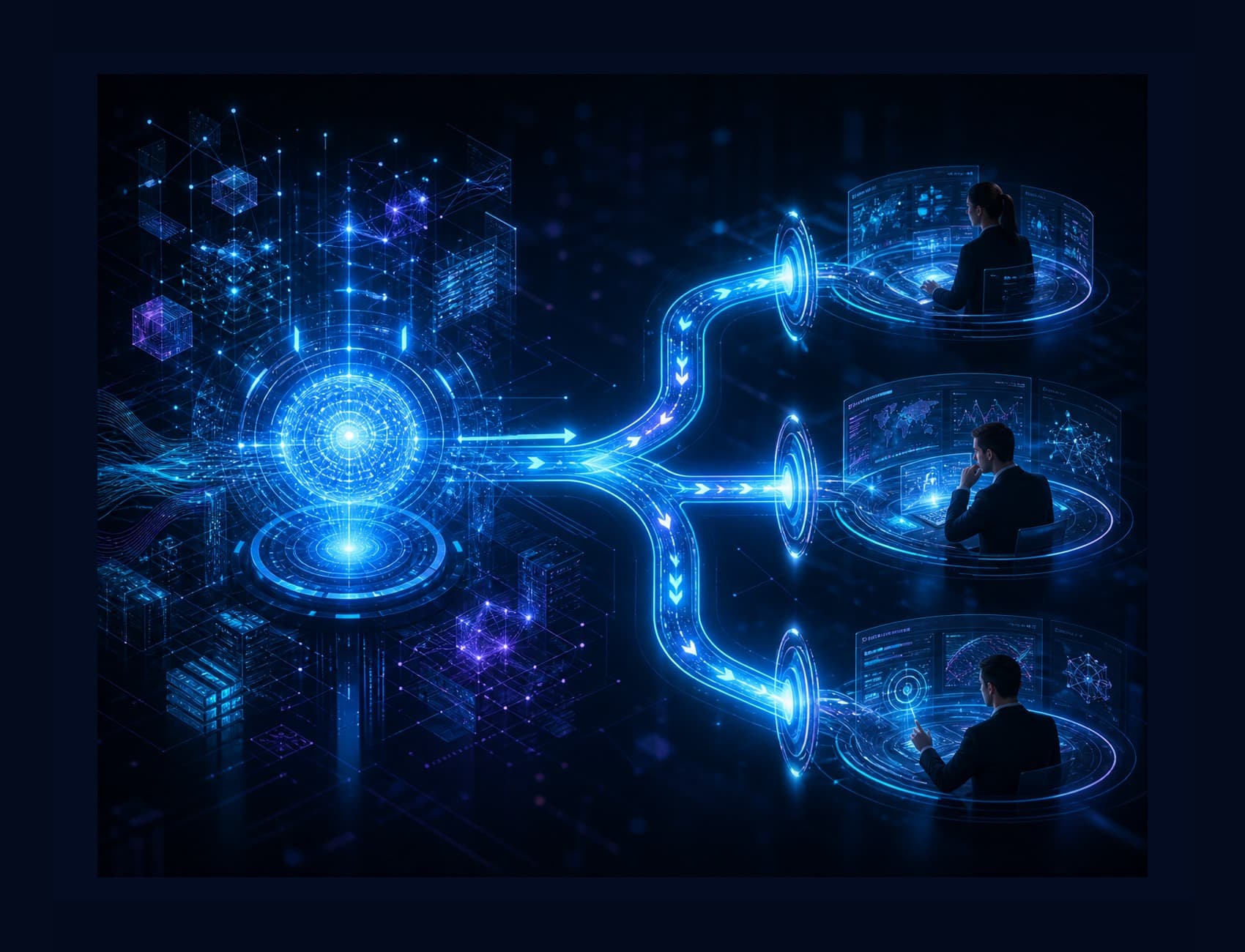
Automation is often presented as the main promise of AI systems. If a workflow can run faster, require fewer manual steps, or produce more output with less effort, it feels like progress.
But automation alone does not make an AI system mature.
The deeper question is what happens when responsibility moves between the AI system and the human organization. Who takes over when the system reaches uncertainty? Who reviews the output before it affects a customer, student, employee, or strategic decision? Who owns the exception when the workflow breaks?
AI systems need handoff governance, not only automation.
The Automation Illusion
Automation creates a visible gain. A task that used to take hours can take minutes. A report can be generated quickly. A draft can be produced instantly. A customer response can be suggested before a human even opens the inbox.
The illusion appears when teams assume that faster task completion means the full workflow is under control.
In reality, many AI workflows do not fail at the moment of generation. They fail at the handoff.
The system produces a recommendation, but no one knows whether it is ready for action. The model summarizes a client situation, but the account owner does not know which parts were inferred. The AI flags an issue, but the team does not know who should respond. The workflow escalates too late because the boundary between machine judgment and human judgment was never designed.
Automation without handoff governance creates speed with weak ownership.
What Handoff Governance Means
Handoff governance is the design of responsibility transitions inside an AI-enabled workflow.
It defines when the system can act, when it should ask for review, when it must escalate, and what evidence must travel with the output.
A mature handoff answers simple but important questions:
What can the AI complete independently? What must a human approve? Which uncertainty signals trigger escalation? Who receives the handoff? What context must be preserved? What happens after correction?
These questions are not technical details. They are operating design.
AI does not remove responsibility from the organization. It redistributes responsibility. Handoff governance makes that redistribution visible.
Why Most AI Workflows Stay Fragile
Many teams build AI workflows around tasks instead of accountability.
They ask, "What can we automate?" That is useful, but incomplete. A better question is, "Where does responsibility change hands?"
For example, an AI assistant may draft a proposal. The task is writing. But the responsibility is commercial judgment: whether the proposal matches the client, protects the brand, and reflects the right promise.
An AI tool may produce student feedback. The task is feedback generation. But the responsibility is learning judgment: whether the feedback helps the student improve without replacing necessary struggle.
An AI system may summarize market research. The task is synthesis. But the responsibility is strategic interpretation: whether the evidence supports the decision.
When teams automate the task but ignore the responsibility, the workflow becomes fragile.
The Four Handoff Points
The first handoff is from input to system. The organization must decide what information is trusted enough to enter the AI workflow. Poor input governance creates poor downstream decisions.
The second handoff is from system to human. The AI output should carry enough context for review: source signals, assumptions, confidence level, and unresolved questions.
The third handoff is from human to action. A person may approve, revise, reject, or escalate the output. That action should be recorded, especially in high-consequence workflows.
The fourth handoff is from correction to learning. When humans fix AI outputs, those corrections should not disappear. They should become examples, rules, evaluation data, or workflow improvements.
These four points turn AI from a tool into an operating system with accountability.
How Leaders Should Apply This
Leaders should start by mapping AI workflows as responsibility flows, not only process flows.
For each workflow, define the decision rights. What can AI suggest? What can it draft? What can it decide? What can it never decide without human review?
Then define escalation rules. Escalation should not depend only on human intuition after something feels wrong. It should be triggered by clear signals: missing information, conflicting data, high customer impact, legal risk, unusual recommendation, or low confidence.
Finally, create review rituals. A workflow should not only be checked when it fails. It should be reviewed regularly so the organization learns where handoffs are too slow, too vague, or too risky.
Final Thought
AI automation is valuable, but automation is not the same as operational maturity.
The mature organization does not simply ask how much work AI can do. It asks where responsibility belongs, how uncertainty moves, and how human judgment is brought back into the system at the right moment.
Automation creates speed. Handoff governance creates trust.
That is the difference between using AI as a shortcut and building AI as a serious organizational capability.
Key Takeaways
- Automation can be useful, but it becomes limited when it is not connected to handoff governance.
- The deeper advantage comes from clearer standards, stronger judgment, and a more intentional operating system.
- Teams should treat this as a practical capability, not only an abstract idea.
FAQ
Why does handoff governance matter?
Handoff Governance matters because it helps teams move beyond surface activity and build a more durable system for judgment, execution, and trust.
Why is automation not enough?
Automation may improve visible activity, but it does not automatically solve the deeper problem of clarity, accountability, and long-term capability.
How should teams apply this idea?
They should define the standard behind the work, review where the current system breaks down, and turn the insight into a repeatable practice.


